
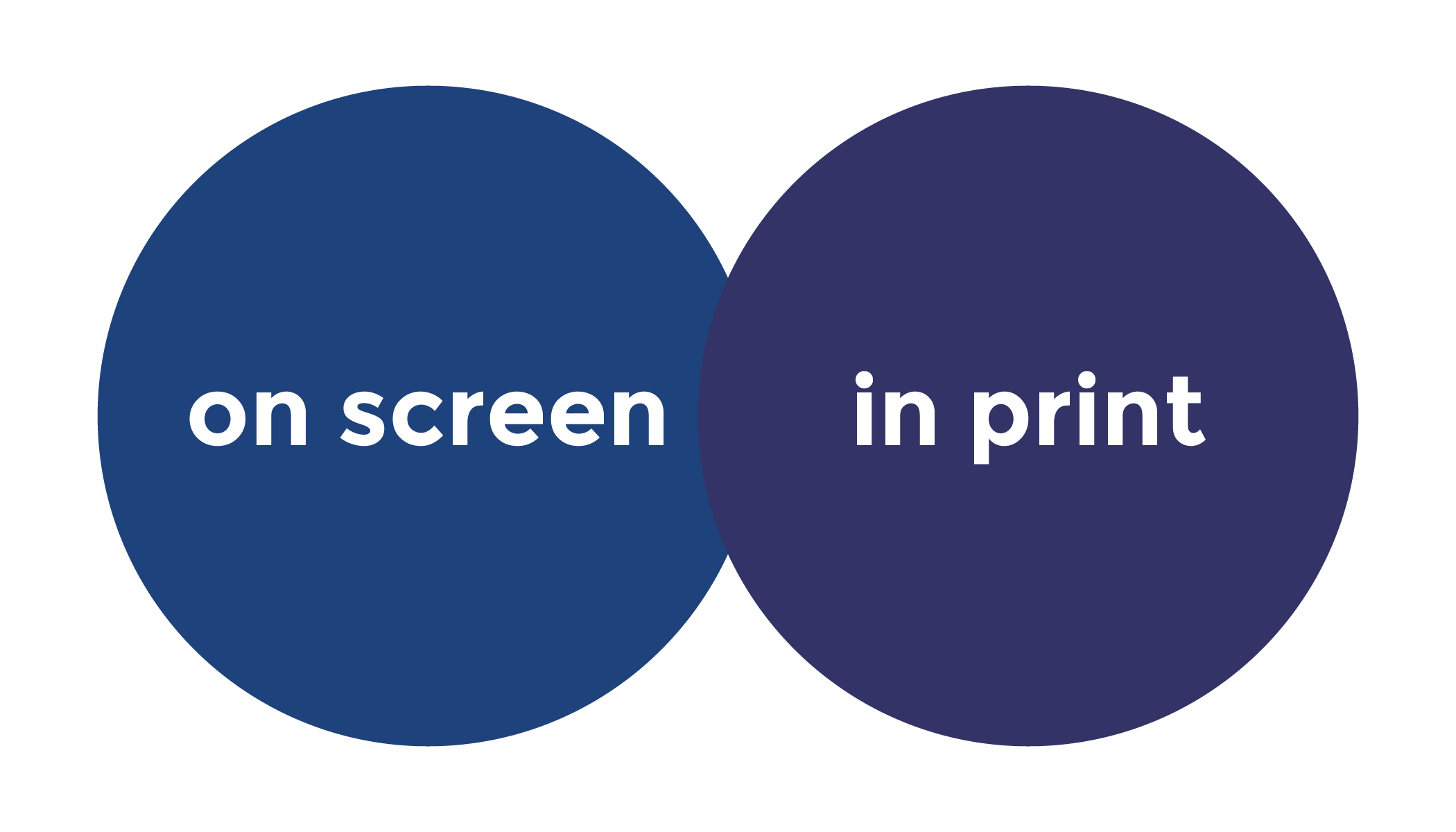
When it comes to printing, blue is one of the most deceptive colors. On screen, your design may look like a perfect royal or navy blue—but once printed, it can shift toward purple or end up looking duller than expected. The culprit often comes down to how cyan and magenta interact in the CMYK color space.
Why Blues Look Purple in Print
In RGB (the color space of your monitor or phone), you can create vibrant blues by simply combining red and green light in just the right balance with blue. But in CMYK (the world of ink), blue has to be built using cyan and magenta inks—and the overlap between the two can easily lean toward purple.
As color expert Hudi Bloch explains, magenta is the troublemaker. Too much magenta in the mix causes your crisp blue to tip into violet. That’s why designers often find their “perfect blue” on screen prints much more purple than they expected.
Why Blues Are More Sensitive Than Other Colors
Blues are tricky because:
- Blues can be tough to print since they live right next to purple in the CMYK spectrum. If there’s too much magenta in the mix, your blue quickly turns violet.
- The human eye is especially sensitive to small shifts between blue and purple.
- RGB can display shades that CMYK simply can’t reproduce, so your screen and print will never be a perfect match.
- Paper type and coating also affect how the inks reflect light, making small imbalances more obvious.

The 30% Rule for Printing Blues
A reliable guideline in the print industry is to keep about a 30% difference between cyan and magenta when building a blue.
For example:
-
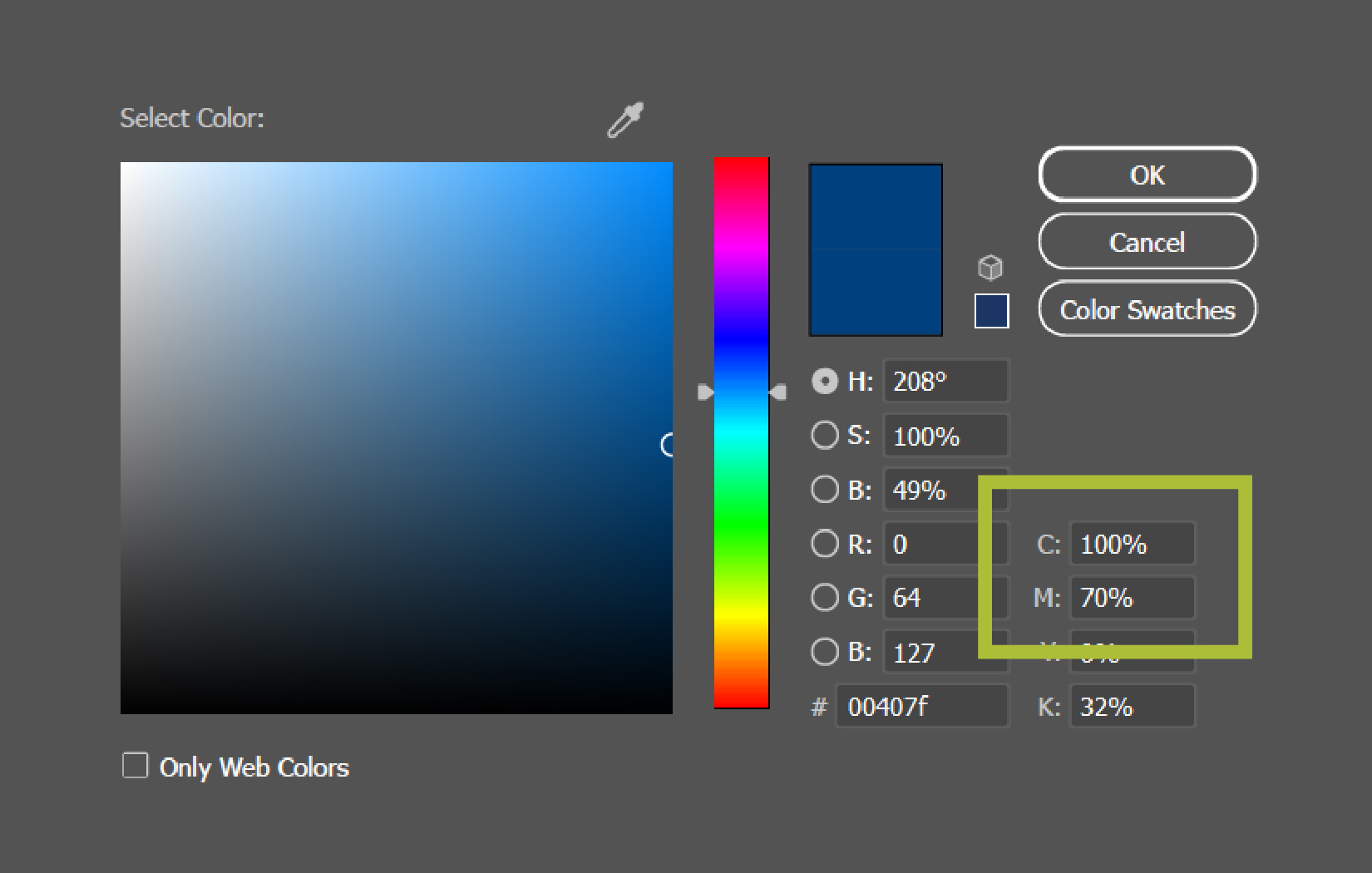
Good blue formula: C=100, M=70, Y=0, K=0
→ A rich, strong royal blue. -
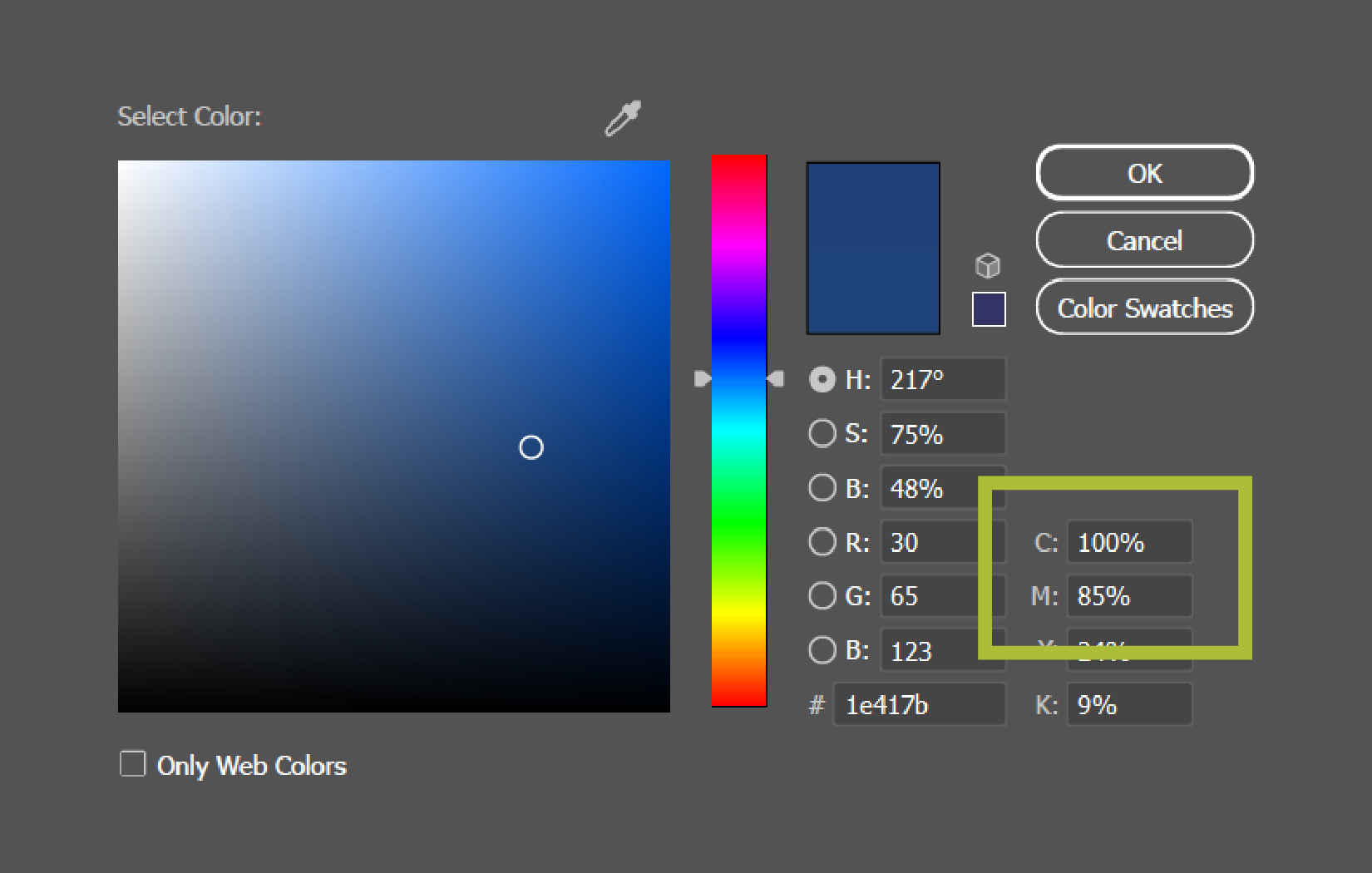
Problematic blue formula: C=100, M=95, Y=0, K=0
→ Leans purple. -
Another problematic formula: C=100, M=40, Y=0, K=0
→ Leans teal.
By holding that 30% spread, you reduce the risk of your “blue” being mistaken for purple or green once it’s on paper.
These values will print with a purple hue
These value will print true blue
Practical Tips for Designers and Clients
-
Check your CMYK build: Always convert your blues to CMYK before sending to print, and keep cyan at least 30% higher than magenta.
-
Use proofs: Request a hard proof if your brand’s blue is critical—it’s the safest way to catch unwanted shifts.
-
Lock in your values: If you have a brand guideline, set exact CMYK builds for your blues so they stay consistent across projects.
At Compel Printing, we help clients catch these color issues before they become a costly mistake. Whether it’s banners, murals, or brochures, we know how important it is that your blues print true.